The second Research Mission of the Erasmus+ project CRAFT-I(n)G – Supporting Craftspersons to develop new Skills and Competences following the implementation of the Regulation (EU) 2023/2411 on Geographical Indications took place in Sibiu, Romania, bringing together the Foundation for Research and Innovation (FRI) and the Romanian partners Complexul National Muzeal ASTRA, project coordinator, and Ars Monumentum Natura. Following the first research mission hosted by FRI in Florence in March 2026, the visit to Romania provided an important opportunity to engage with the local community of craftswomen who produce the traditional Ia de Sibiu.
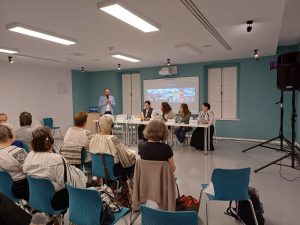
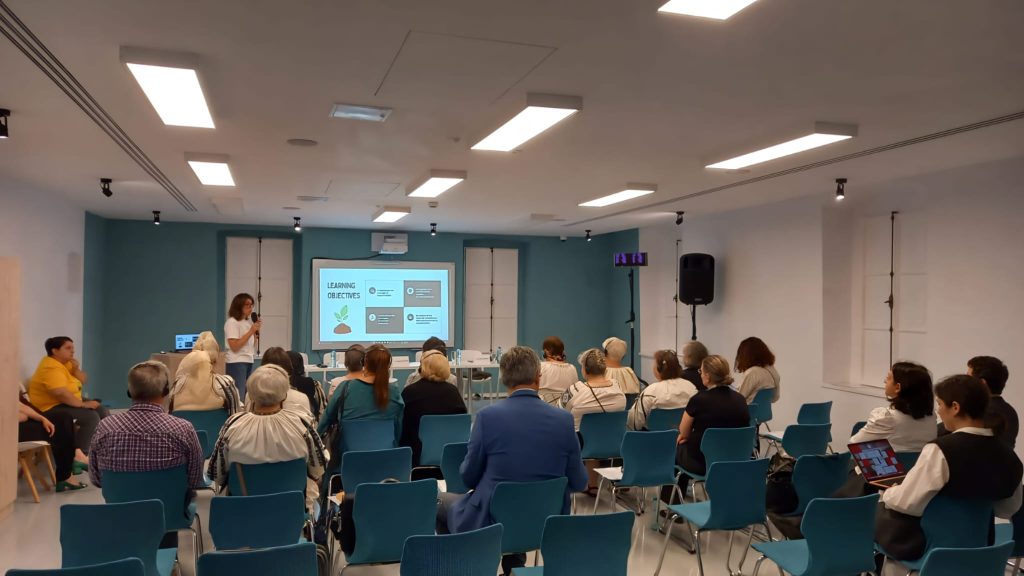
During the mission, FRI delivered a workshop on sustainability in the craft sector. The activity represented not only a training opportunity but also an important moment for research and exchange with the craftswomen involved in the project, providing first-hand insight into the history of the Ia de Sibiu, its production techniques and the cultural and symbolic value this traditional garment continues to hold for the local community.
The mission was hosted by the Complexul National Muzeal ASTRA, one of Romania’s leading institutions dedicated to the preservation and promotion of ethnographic heritage. Thanks to its close relationship with the local community of craftswomen, the museum plays a central role in the project’s research, training and community engagement activities.
At the heart of CRAFT-I(n)G is the traditional Sibiu blouse (Ia de Sibiu), an important element of Romania’s textile heritage and a potential candidate for protection under the new European Geographical Indications scheme for craft and industrial products. Introduced through Regulation (EU) 2023/2411, this new framework enables the protection of craft and industrial products whose quality, reputation or other characteristics are closely linked to a specific geographical area, recognising the value of local know-how and traditional production techniques. Within this context, the project supports the community of craftswomen through research activities, knowledge exchange and competence development, helping them prepare for the future pathway towards European Geographical Indication recognition.