‘And if you remember and see the light’: nostalgia for tourism as it once was.
In the 1960s and 1970s, we spoke of ‘mass tourism’. The term ‘overtourism’ entered common use between 2016 and 2019, driven by phenomena such as low-cost flights, short-term rentals and the growing ease of international travel.
Tourism was once seen purely as an engine for economic growth. However, around 2020, when the Covid-19 pandemic emptied our streets, people were able to experience and listen to their cities in a more authentic way. This heightened awareness among residents of many European urban areas, prompting protests against mass tourism. Today, overtourism is a major challenge that needs to be managed, given its considerable impact on daily social life, the environment and culture.
The debate is lively and is widely discussed on social media in unmistakable terms. As sociologist Lorenzo Viviani wrote : ‘It is a trend that has transformed the city since the early 2000s, much like the 1966 flood. The difference is that, back then, it was the River Arno overflowing; today it is the flood of tour group flags in a queue, with the standardised, mass-produced schiacciatina in hand.‘ The press is paying close attention too, with headlines like ‘What (else) is overtourism stealing from Florence?’ (Firenze Today, October 2025), and ‘Short-term rentals in Florence: the anti-overtourism plan wins’ (La Nazione, May 2026).
The press is paying close attention too, with headlines like ‘What (else) is overtourism stealing from Florence?’ (Firenze Today, October 2025), and ‘Short-term rentals in Florence: the anti-overtourism plan wins’ (La Nazione, May 2026).
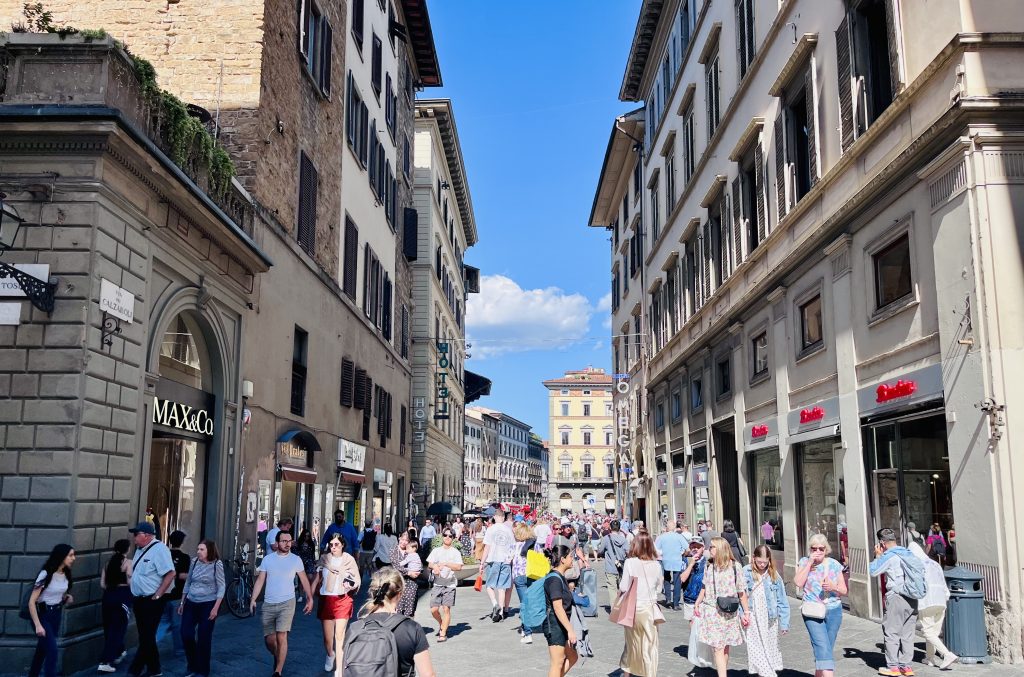
For those who know Florence and other renowned Italian destinations well, walking through their streets can evoke a sense of nostalgia. Historic shop windows have been replaced by impersonal souvenir displays, raising growing concern about the loss of urban authenticity.
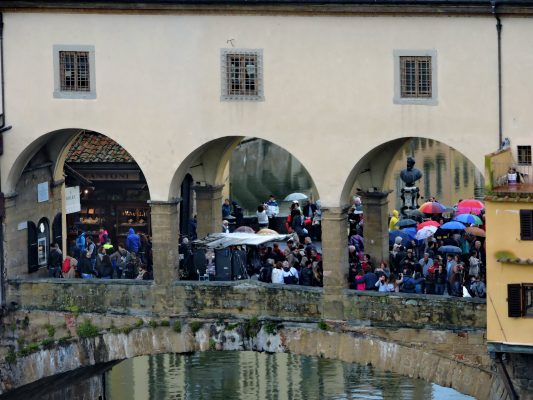
In short, there is a clear problem to address: overcrowding in historic city centres, where visitors end up ‘piling up’ around monuments and cultural heritage sites. This leads to disruption, safety concerns and, above all, less satisfying tourist experiences.
Towards a new ‘TOURISMO’
A European project is now offering concrete tools to mitigate overtourism, enabling public authorities to manage tourist flows more effectively through innovative technologies that support responsible, high-quality tourism: TOURISMO – TOURism: Innovative and Sustainable Management of flOws, co-funded by the Interreg Euro-MED programme and officially launched in 2024, addresses these challenges head-on.
The project leverages the Snap4City platform, developed by the DISIT Lab at the University of Florence. This platform collects data and monitors visitor density and behaviour in real time through thermal cameras and other tracking systems, all while strictly respecting visitor privacy.
‘These data are a valuable resource for public administrations managing cities, helping them optimise interventions and strategic choices. They are also useful for researchers, who can analyse them to identify recurring patterns and make targeted, evidence-based decisions,’ explains Paolo Nesi, Professor at the Department of Information Engineering and member of the project team.
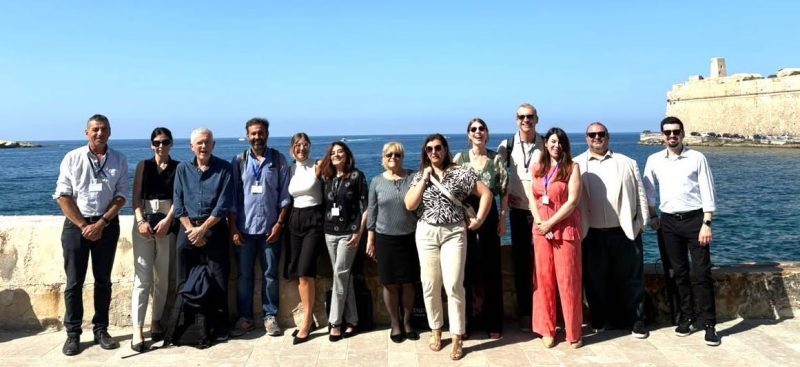
Greece, Italy, Spain, Cyprus, Bulgaria, Croatia and Malta are the seven countries involved in the TOURISMO project, which tests its approach in a range of settings, including UNESCO sites, ports, city centres, beaches, cultural landmarks and parks.
Crucially, the project acts as a bridge among public authorities, tourism organisations, researchers, local businesses, residents and tourists: after all, managing tourist flows affects everyone who lives in or visits these spaces every day.
To capture the visitor experience firsthand, QR codes have been placed at key locations across the pilot cities. Tourists can scan them to leave feedback, which is automatically processed to provide public authorities with actionable insights.
In Valencia, the QR code is displayed at the entrance to La Lonja de la Seda. In Biševo, Croatia, it can be found on the boats taking tourists to the Blue Cave. In Malta, beachgoers can access it through the services available at Golden Bay beach. In Florence, it is available in two hotels of a well-known chain and in some public toilets within the UNESCO area.
The project has already delivered highly rewarding, tangible results thanks to its practical approach and its focus on solutions to a pressing challenge. Stefano Bilotta, a researcher at the ‘Ulisse Dini’ Department of Mathematics and Computer Science and member of the project team, shares a success story: ‘The experience in Malta, where sensors were installed at the entrance to the famous Golden Bay beach, has enabled public authorities to manage the influx of beachgoers. These data give tourists real-time information to help them decide where to go, and even monitor the flow of cars in the adjacent car park.’ By crossing this information with the actual beach acreage, public authorities can manage the site’s capacity and prevent overcrowding.
Stefano Bilotta also notes that: ‘The main challenges for the University of Florence research team concerned the technical setup of the various sensors, ensuring they communicate seamlessly with the Snap4City platform to generate reliable business intelligence tools.’
Today, the project is progressing with excellent synergy among the partners, and plans are underway to extend the service to many other European cities.

The Florence experience
In Florence, the project has successfully hit the ground running thanks to close collaboration with local institutions. A Memorandum of Understanding wassigned between the Municipality of Florence, the DISIT Lab of the Department of Information Engineering (DINFO) and the Fondazione per la Ricerca e l’Innovazione, both of the University of Florence, with the aim of implementing the pilot project in the city.
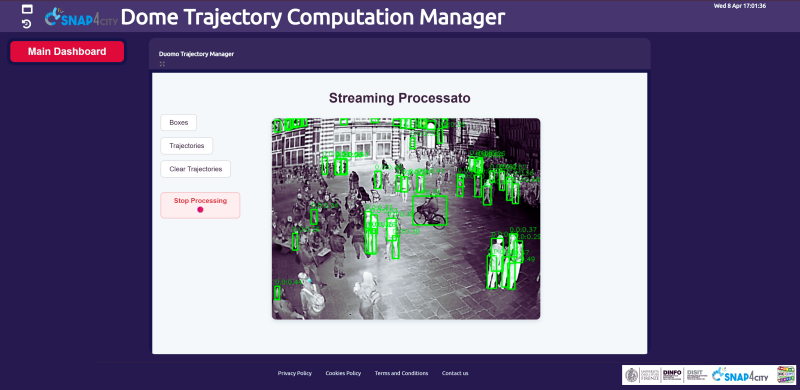
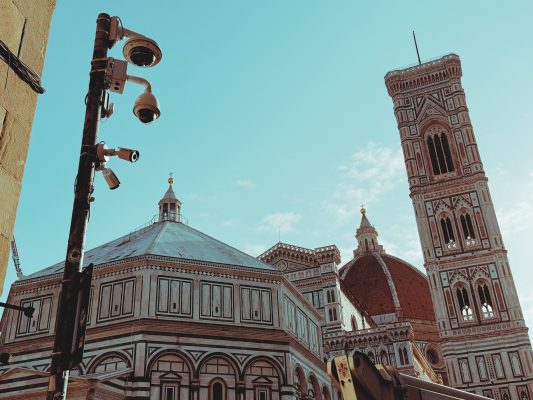
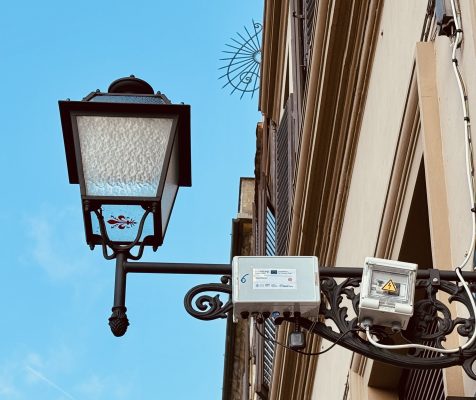
Above the streets crossed by thousands of visitors every day, small thermal cameras and Wi-Fi sniffers anonymously monitor tourist flows, turning movements into data to understand how the city ‘breathes’. Using advanced algorithms, the Snap4City platform processes these data to provide policymakers with the insights needed to shape even more targeted and high-impact policies. These cameras and sensors have been strategically placed in specific areas around Piazza del Duomo and the Oltrarno district.
DINFO/DISIT Lab and the Fondazione per la Ricerca e l’Innovazione are the two Italian partners driving the activities and interpreting the data alongside the local administration. The platform provides the municipality with clear dashboards and flow charts, making it easier to understand visitor trajectories and density.
The pilot is one of eight across seven European countries, allowing partners to compare results and share methodologies and best practices on urban sustainability.
The TOURISMO project represents one step, one action towards mitigating the risks of overtourism. Together with other local initiatives, it encourages us to rethink urban spaces and find smart, sustainable solutions.
For further information:
- Dr Franca Fauci, Fondazione per la Ricerca e l’Innovazione – University of Florence | fauci@unifi.it
- Dr Chiara Guiggiani, Fondazione per la Ricerca e l’Innovazione – University of Florence | guiggiani@unifi.it
- Prof Paolo Nesi, DISIT Lab – Department of Information Engineering (DINFO) – University of Florence
- Dot. Stefano Bilotta, Department of Mathematics and Computer Science ‘Ulisse Dini’ (DIMAI) – University of Florence
- Visit the TOURISMO project website